

A few months ago, I decided to make the switch from being partnered with Sony Electronics to joining ZEISS Camera Lenses. Upon doing so I was opened to their catalog of lenses that I could choose to use. I decided that I would obtain a few of the ZEISS Loxia lenses. I photographed with the Loxia 50mm in 2018 and enjoyed that lens quite a bit. I didn’t buy it at the time, but with joining ZEISS I decided to add three lenses, the 35mm, 50mm and the 21mm.
I honestly hadn’t considered this lens before, but I decided to try it as an alternative to my Batis 25mm. The Loxia line offers a 25mm as well, which is an f/2.4 aperture lens and I thought having a lens in the same focal length wouldn’t make much sense for me, especially a lens that’s a few stops slower.
In a very short time, I’ve photographed a wide array of genres with this lens and have used it a tad more than the Batis 25mm, ironically enough! Most times this lens is used on the R series Sony Alpha cameras, but occasionally I’ll place this lens onto the Alpha 9 as well. This lens is a bit pricey for some, at $1,499, especially being a manual focusing lens, but I can honestly say it is a beautiful lens! I didn’t think I’d use it that often, as I do have the auto focusing Batis 25mm and the Sony/ZEISS 16-35mm, which is wider, but those lenses aren’t used nearly as often as the 21mm has been lately.

ZEISS Loxia 21mm Specs & Images
- Sony E-Mount (FE - Full Frame lens)
- DISTAGON Optical Lens Design
- Aperture Range: f/2.8-f/22
- ZEISS T* Anti-Reflective Coating
- 52mm Diameter Filter Thread
- Metal Construction with rear Weather Seal gasket
- 91 degrees - Angle of View
- 25cm Minimum Focus Distance
- Manual Focus
- 0.87 lbs. (394g) - Weight
Something to note is that this lens is a Full Frame (FE) lens for Sony’s Mirrorless E-Mount cameras, but it can be used on the cropped APS-C cameras, which will give you a 35mm equivalent focal range of 31.5mm.

What I think about the Loxia 21mm
It’s a small and compact wide-angle prime lens. The focusing of this lens is very smooth and having that traditional lens build, with the depth of field scale and meter and feet engravings make manual focusing easier than with the auto-focusing lenses, which utilize the fly-by-wire system and doesn’t have accurate manual focusing capability because of that.
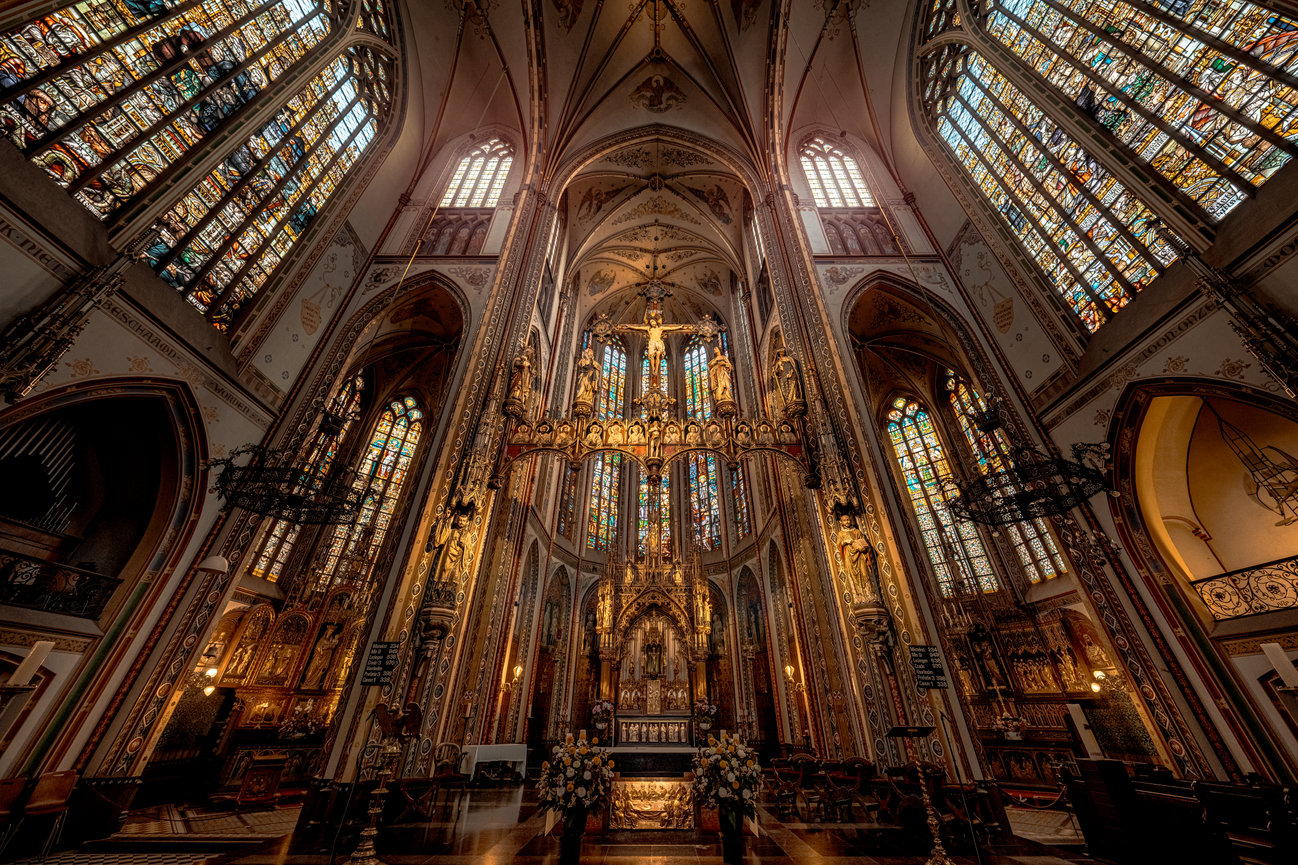
From worship to architecture and everything in between, my experience with this lens has been quite pleasing. I typically take this lens over the 16-35mm and 25mm lenses, as it’s more compact than those two. The Batis 25mm isn’t a heavy lens at all, but it’s a 67mm filter thread where this is only 52mm, giving me even more space in my bag.

What stands out about the Loxia 21mm?
- Manual Focus – The focusing of this lens is very smooth without any play. I’ve paired this lens with the Sony Alpha 7R II, 7R III and Alpha 9 and it’s been easy to focus on all three of those cameras. Being a native lens that means that with your manual focus adjustments the camera with automatically magnify the preview image (if you have your settings enabled to do this) to the point you want, to make sure you’re obtaining a perfectly in focus image. For those new to manual focusing you’ll probably struggle initially, but it will become second nature after a few weeks of usage.
- De-Click – This feature of the lens is great for cinematographers who wish to use this lens for filming. You’re able to De-Click the lens for constant fluid aperture movement from this lens.
- Build/Focus Ring - You're obtaining an all metal design lens. The lens hood is also a metal construction and includes a very tight gasket seal on the rear of the lens when your lens is attached to the camera, making for a gap-less connection with the lens and the flange of the camera. It does have a more rugged feel than the ZEISS Batis lenses (although the Batis lenses are dust and weather sealed lenses, vs that of the Loxia lenses) and feels like what you’re use to utilizing from the other ZEISS lines, such as the Milvus or Classic. These lenses also have a focus ring that’s common to photographers of the ZEISS Classic lenses, with a ridged ring compared to the smooth rings on Otus, Milvus, Batis and even Touit lenses. The lens includes electronic contacts, which allows for EXIF data to be read by the camera.
- Manual Aperture Ring – This isn’t something unique to the Loxia lenses and many others for the Sony E-Mount, including many Sony/ZEISS and Sony G/GM lenses have these manual aperture rings. For most it may take getting use to manually adjusting the aperture more than it will manually adjusting the focus. The one thing I love about it is that I can’t accidentally change my aperture on this lens and is something that happens often with in camera aperture adjusted lenses.
- Size – It’s quite a compact lens. The diameter of the filter thread of this lens is 52mm, which is the same for the entire lineup of Loxia lenses. This is a very essential thing for Cinematographers utilizing gears and not having to be concerned about lenses of different sizes.
- T Coating* - ZEISS lenses are popular for this coating, which reduces lens flare drastically and enhances overall performance of the lens. Whether it’s a filter or lens with this coating you’ll notice the difference from having it vs a lens or filter that doesn’t. It’s always very effective and really brings more contrast to your images. There are times when I do want to have a little bit of lens flare, but the coating of these lenses is so good that it’s sometimes hard to do. The irony!
- Image Quality/Color – Just as with any ZEISS the color and sharpness are great quality. Wide open this lens is quite sharp, but it improves further around f/4 across the entire frame.

What is there to dislike about the Loxia 21mm?
There’s very little of this lens that doesn’t move (focusing and aperture rings) and that makes this lens a bit of a challenge to mount and unmount from the camera body. You’re bound to adjust these rings and even the lens hood when it’s attached to the lens.

Is Loxia needed if I have Batis?
I can’t answer that for everyone, but my thoughts are that it’s a nice compliment to the Batis lenses. Is it needed for most people? No. You’re either going to be someone who’s entirely auto-focusing or entirely manual. The only way I can see anyone having both is if they’re really wanting both lines of full frame lenses for Sony E-Mount from ZEISS.
I wanted the Loxia lenses for several years, but I originally couldn’t justify the price of owning them and having focal lengths that are close to what I already had from my Batis lenses (which at one time I owned all 5 of them, now have 4). When I switched companies, from Sony to ZEISS the opportunity opened itself to obtain the 3 lenses I was interested in in the Loxia’s and not have to spend over $3,000 for them. Presently they’re used more than my Batis lenses. I knew I’d use them, but again I couldn’t justify spending more money than I needed to on lenses.
If your work doesn’t require auto-focusing and you don’t own any ZEISS lenses now, then I’d recommend the Loxia’s first. They’re more compact than the Batis, making for a smaller kit to travel with. Remember that the Loxia isn’t weather sealed like the Batis, so if being in the elements are important then you’re 100% going to have to look at Batis for that.

Conclusion: Who is/isn’t this for?
If you want to have that manual focusing experience and have the budget to afford such a lens, then it’s a fantastic investment to make. At $1,499 it’s a hefty price to fork over, but the Loxia 21mm is a fine piece of glass.
If what you photograph on a regular basis requires auto-focusing then buying this wouldn’t serve much purpose for you. Even as a lens to have as a toy, that you might want to play or try out on the weekends and again if you have the money to spend then go for it. For auto-focusing needs you’d for sure want to look at the Batis lenses instead. The lenses in the Loxia family are either directly or closely shared in focal length among the Batis family as well, so you wouldn’t have a problem with lenses in the ranges you may be looking for.
More Photos
All images featured in this review were photographed with various cameras in the Sony Alpha 7 series, Sony Alpha 9 and/or Sony Alpha 6000 series.
Click Here to view the full gallery of images taken with the ZEISS Loxia 2.8/21mm Distagon.
CLICK HERE TO PURCHASE MY LIGHTROOM & PHOTOSHOP (CAMERA RAW) PRESETS


NOTE: The links on this site are affiliate links, that help support this site.


Leave a comment
0 Comments